Quality and compliance
Press-on nails quality control and compliance: a US and EU buyer’s guide
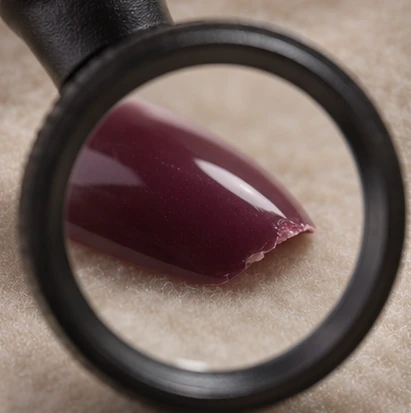
A press-on set fails in small ways: a cracked tip, a missing size, a colour that drifted. This guide shows how to catch those defects in the factory, how to size an AQL inspection, and which US and EU rules apply to each part of the kit.
This guide is a buyer’s checklist, not legal advice. Rules change and classification depends on your exact product, kit and claims. Confirm requirements with the official sources linked here and with a qualified regulatory adviser or your appointed Responsible Person before you sell.
Start with classification: tips, glue and the other liquids
A press-on kit is several products in one box: plastic tips, an adhesive (liquid glue or adhesive tabs), and often a prep pad, a file and a wooden stick. Regulators look at each part separately, and the answer is not the same in every market.
- The tips are solid plastic articles. In the EU, the Cosmetics Regulation covers a cosmetic product defined as a “substance or mixture” placed on the body for a cosmetic purpose, so a finished plastic tip is generally assessed under general product safety rules instead. In the US, FDA’s cosmetic product categories in 21 CFR 720.4 include “nail extenders” under manicuring preparations, so assume FDA may treat a press-on set as a cosmetic and plan for it.
- Nail glue is where the two markets diverge most. The EU working group’s borderline products manual (version 5.5, June 2025) says glues whose only function is to fix fake nails to the nail plate cannot be considered cosmetic products, while a decision on any individual product stays case by case. A June 2026 Danish Environmental Protection Agency survey of beauty adhesives applies the same reading: transparent nail glue is treated as a chemical mixture under REACH and CLP.
- Removers and other liquids lean the other way. The same manual treats products that remove glue from skin or nails as cosmetics because they clean, and substances used to form artificial nails on the nail are likely cosmetics.
Agree the classification of every component, in writing, with your regulatory adviser or Responsible Person before you plan tests and labels. The Commission’s borderline products page stresses that classification is decided case by case.
Factory QC in three stages
Inspection at the end cannot fix a process that drifted in the middle. A useful QC plan for press-on nails has three stages, each with a record you can ask to see.
| Stage | What is checked | Record to ask for |
|---|---|---|
| Incoming (IQC) | ABS or acrylic resin lot, pigments and gels, glue lots and their dates, adhesive tab sheets, printed boxes and inserts against approved artwork | Supplier certificate of analysis or test report per lot, safety data sheet for the glue, artwork proof sign-off |
| In-process (IPQC) | Moulded tip dimensions and curve, flash and burrs, colour against the approved standard, cure of gel and top coat, adhesion of decorations, print registration | First-article check per shift or colour, colour comparison log, rejected-part tally by defect type |
| Final (FQC/OQC) | Set completeness and size mix, finish and decoration against the golden sample, kit contents, label and batch code, carton marks | AQL inspection report with lot size, sample size, defects found and accept or reject decision |
At ORLA every order is inspected before packing. What the inspection covers, and the plan you want applied to your order, should be agreed in writing at sample approval, not after production.
Golden samples and the approved standard
Keep two signed and dated sets of the approved sample: one at the factory, one with you. Every later judgement (is this colour right, is this decoration loose) is made against that standard. If the design changes, retire the old golden sample and sign a new one.
A defect library for press-on sets
Generic garment or electronics checklists miss the defects that matter on nails. Agree a library like this before production, with a photo of each defect, and classify each one. The classes below are a starting proposal, not a rule: your risk and your retailer’s requirements decide the final list.
| Defect | Suggested class | How to check |
|---|---|---|
| Sharp edge or burr that can scratch skin | Critical | Run a fingertip along the cuticle edge and sidewalls of sampled tips |
| Glue tube leaking, unsealed or cap split | Critical | Squeeze test and visual check of the blister or bag |
| Required warning or label element missing | Critical | Compare against the approved label checklist for the market |
| Wrong design or SKU in the box | Critical | Barcode and design check against the order |
| Missing size or wrong size mix (for example 23 of 24 tips) | Major | Count tips and check size numbers on the tray |
| Cracked, chipped or split tip | Major | Visual check, flex test on a sample tip |
| Colour outside the approved tolerance | Major | Compare to the golden sample under the same agreed light |
| Loose or missing rhinestone, charm or 3D decoration | Major | Light push test and visual check |
| Wrong shape or length, or curve that will not sit on the nail | Major | Compare profile and C-curve with the golden sample |
| Glue or adhesive tabs missing from the kit | Major | Kit contents check |
| Batch code missing or illegible | Major | Visual check on unit and outer carton |
| Bubbles, dust or fibre under top coat | Minor (major if visible at arm’s length) | Visual check at an agreed distance |
| Slight print offset, chrome or cat eye band off-centre | Minor | Compare to the limit sample |
| Scuffed or dented retail box | Minor | Visual check |
A loose decoration is a quality problem and can become a safety one if small parts detach. If your design uses small charms, discuss the risk with your adviser rather than treating it as cosmetic only.
AQL sampling, worked through
Acceptance sampling inspects a random sample from a lot and accepts or rejects the lot on the number of defective units found. The two standards buyers usually name are ISO 2859-1 and ANSI/ASQ Z1.4, which use the same structure: lot size and inspection level give a sample size code letter, and the code letter with your AQL gives the sample size and the accept and reject numbers. ISO’s acceptance sampling committee lists ISO 2859-1:2026 as the current edition, with the 1999 edition withdrawn, so name the edition in your inspection contract.
Define the inspection unit first. For press-on nails the sensible unit is one finished, boxed set, so a set with one cracked tip counts as one defective unit.
Worked example (assumptions, not ORLA figures). A brand orders one design as a single lot of 6,000 boxed sets. Inspection is single sampling, normal inspection, general inspection level II. Lot size 3,201 to 10,000 gives code letter L, which gives a sample of 200 sets. With AQL 2.5 for major defects, the lot is accepted with up to 10 defective sets and rejected at 11. With AQL 4.0 for minor defects, accept up to 14 and reject at 15. Critical defects are agreed as zero accepted: one critical defect rejects the lot. If the same brand splits the order into three equal lots of 2,000 sets, each lot falls in 1,201 to 3,200 (code letter K): 125 sets per lot, major AQL 2.5 accept 7 reject 8, minor AQL 4.0 accept 10 reject 11.
These values come from the tables in the 1999 edition of ISO 2859-1 and the equivalent Z1.4 tables. Check them against the edition your contract names before you sign an inspection order.
- Inspect each design and colourway as its own lot where you can. A mixed lot hides a bad design behind good ones.
- A rejected lot is not a disaster if the contract says what happens next: 100% sorting and re-inspection, rework, or replacement, and who pays for the second inspection.
- AQL is not a promise that only 2.5% of units are defective. It is the quality level the sampling plan tolerates over a run of lots. If one defect would cost you a retail listing, set a tighter AQL or treat it as critical.
Traceability: from batch code back to resin and glue lot
When a customer complains or an authority asks, you need to know which sets share the problem. Ask the factory to show how one batch code links to:
- production date and line or team;
- the resin lot for the tips and the gel or paint lots for the finish;
- the glue lot and its manufacturing or expiry date;
- the AQL inspection report for that lot;
- retained sample sets from the lot, kept for an agreed period.
Traceability is also a legal labelling point. In the EU, cosmetic products must carry the batch number of manufacture or a product reference under Article 19(1)(e) of the Cosmetics Regulation, and products under general product safety rules need a product identifier such as a batch or serial number, as summarised in UK government guidance on the EU GPSR. Print the code on the unit and the outer carton.
Chemical questions to ask before production
- Tip resin. Is it ABS or acrylic, from which supplier, and is the grade consistent between lots? ABS is made from monomers that include styrene, and California lists styrene under Proposition 65 as a carcinogen since 22 April 2016. Whether a warning is needed depends on exposure, so ask your adviser whether residual monomer data are needed for your product.
- Glue. Full composition, safety data sheet, and the ethyl cyanoacrylate content. The Danish EPA survey found ethyl 2-cyanoacrylate in 13 of 27 nail and lash adhesives it analysed, at 57% to 100%.
- Gel finishes. Which photoinitiators and methacrylates are used, and is the finish fully cured before packing? In the EU, cosmetic products containing TPO have been banned from placing and making available on the market since 1 September 2025.
- Test reports. Do they name your product, materials and batch, and who commissioned them?
United States: what applies now
The Modernization of Cosmetics Regulation Act of 2022 (MoCRA) added duties that sit on two parties: the facility that makes the product and the responsible person, which the statute defines as the manufacturer, packer or distributor whose name appears on the label. For a private label press-on brand, that is usually you.
| Duty | Who | Timing as of 17 November 2026 |
|---|---|---|
| Facility registration | Owner or operator of the manufacturing facility, including foreign facilities, which must name a US agent | New facilities within 60 days of starting to make cosmetics; renew every two years |
| Product listing | Responsible person | New products within 120 days of marketing in interstate commerce; update annually |
| Safety substantiation | Responsible person | Before and while marketing; keep records |
| Serious adverse event reports | Responsible person | Within 15 business days of receiving the report, with a copy of the label |
| Domestic contact on the label | Responsible person | In force since 29 December 2024 |
- Registration and listing. Section 607 of the Act sets the 60-day and 120-day windows, biennial renewal and annual listing updates. The original deadline was 29 December 2023, and FDA delayed enforcement until 1 July 2024. FDA’s registration and listing page (current as of 9 September 2026) says submissions go through Cosmetics Direct.
- Small business exemption. Businesses with average US cosmetic sales of less than $1,000,000 a year over the previous three years, adjusted for inflation are exempt from registration, listing and the future GMP rules, but not from safety substantiation, adverse event reporting or labelling. The exemption does not apply to products intended to alter appearance for more than 24 hours where removal by the consumer is not part of normal use. Press-on nails are removed by the consumer, but confirm how your adviser reads this for your product.
- Safety substantiation. The responsible person must keep records showing adequate substantiation of safety, meaning tests, studies or other evidence that qualified experts consider sufficient to support a reasonable certainty that the product is safe.
- Adverse events. Serious adverse event reports are due within 15 business days, and records are kept for six years (three years for qualifying small businesses). “Serious” includes infection, hospitalisation and significant disfigurement or disability.
- Recalls and GMP. FDA’s MoCRA page, current as of 29 October 2026, lists final guidance on mandatory cosmetic recalls issued that day and shows cosmetic GMP rules still in development, with no final rule.
Labelling under 21 CFR 701 and 740
- Identity statement on the principal display panel, and the name and place of business, with “Manufactured for” or “Distributed by” where you did not make the product, plus net quantity in the bottom 30% of the principal display panel.
- Ingredient declaration for cosmetics sold at retail, in descending order of predominance, in letters at least 1/16 inch high (1/32 inch on small packages).
- A warning wherever one is necessary or appropriate to prevent a health hazard, in bold type on a contrasting background. The responsible person must substantiate safety and retain records under MoCRA. A warning does not replace that obligation.
- A US address, phone number or electronic contact through which the responsible person can receive adverse event reports.
FDA on nail products and methacrylates
FDA’s nail care products page explains that artificial nails are mainly acrylic polymers that can keep traces of monomer, which can cause reactions in people already sensitised to methacrylates. FDA removed products containing 100% methyl methacrylate monomer from the market in the 1970s, yet says no regulation specifically prohibits MMA in cosmetics. Ethyl methacrylate is considered safe when directions tell users to avoid skin contact. For a factory-finished press-on set, ask which monomers are used in any gel finish and how cure is verified.
California
Proposition 65 requires a clear warning before exposure to a listed chemical unless the business can show the exposure is low enough; OEHHA’s list is updated at least once a year. California also has its own cosmetic ingredient reporting and restriction laws, so add a California check to your adviser’s brief if you sell there.
European Union in summary
- Cosmetic components (for example a glue remover or cuticle oil) need an EU Responsible Person, a safety assessment, a product information file, notification on the Cosmetic Products Notification Portal and Article 19 labels.
- Glue whose only job is to attach the tips is likely a chemical mixture: classification and labelling under CLP, and a safety data sheet if it is classified as hazardous.
- Tips and tools fall under the General Product Safety Regulation, which has applied since 13 December 2024 and needs a responsible economic operator in the EU.
Detail is in our EU testing and labelling guide and the EU documents and dossier guide.
Buyer example: one design, two markets
Example brand (fictional): a US-based online brand plans one French tip design, 24 tips in 12 sizes, sold in the US and Germany. Steps: (1) classification memo from its adviser: tips as articles in the EU, glue as a CLP mixture, prep pad assessed separately; US treatment as cosmetics confirmed. (2) Label set: US panel with “Distributed by”, ingredient list and US contact; German pack with the EU economic operator, batch code and German warnings. (3) QC: defect library signed, golden sample signed, AQL level II with 2.5 major and 4.0 minor, one lot per colourway. (4) Documents: glue SDS, resin specification, test reports naming the product, the inspection report for each lot.
Choosing a compliance-ready manufacturer
- Do they answer component-by-component questions about materials and ingredients, in writing?
- Can they show batch codes, retained samples and a sample inspection report?
- Will they accept your defect library, AQL plan and third-party inspection?
- Will they print labels to your approved artwork without changes?
- Do they confirm which documents are available for your product before you order, rather than promising certificates in general?
See how we handle inspection and documents on our quality and compliance page, then request samples with your target markets listed so we can confirm the documents for your product.