Before you order
Samples and sampling
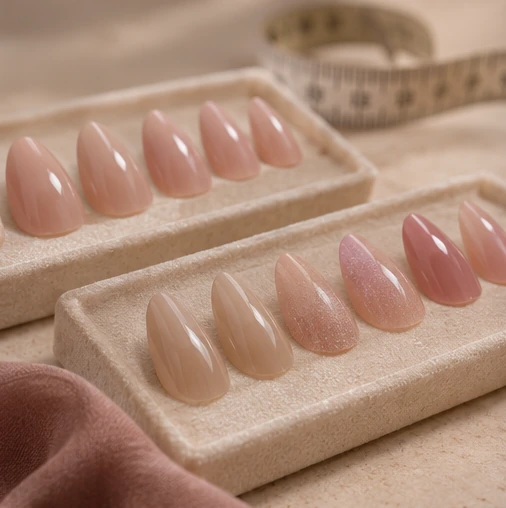
Every order starts with a physical sample. It is where shape, colour, finish and packaging are decided, and it becomes the standard that production is checked against.
- Typical sample time
- 3 to 15 days
- After approval
- 30 to 45 days production
- Approval
- In writing
- Cost
- Quoted per project
Which sample you need
| Sample | Used for | What it proves |
|---|---|---|
| Library sample | Wholesale and private label | Fit, finish and feel of developed designs in your shape and set size |
| Matched sample | OEM | That your artwork, colours and specification can be reproduced |
| Development sample | ODM | That a design concept works as a physical set |
| Packaging proof | Private label, ODM, OEM | Print, fit of the tray and pack-out |
| Approved master | Every route | The standard production and inspection are checked against |
What moves the timeline
The 3 to 15 day range is driven by what has to be made new. Use this to predict where your sample will land.
| Shorter | Longer |
|---|---|
| Library styles in an existing shape | A new shape or length |
| Standard colours | Colours matched to your physical standard |
| Flat finishes: solid, French, glaze | Raised 3D work, hand-painted art, applied decoration |
| A complete brief with references | Open questions about shape, kit or packaging |
Courier time to your address is on top of the making time and depends on the destination.
How to judge a sample
- Fit across the size run. Try every size on several people if you can. The set must cover the customers you sell to.
- Colour in three lights. Daylight by a window, indoor warm light and your phone camera. Customers see your nails on screen first.
- Finish up close. Look for dust or bubbles under the finish, rough edges at the cuticle, uneven gloss and loose decoration.
- Application and wear. Apply with the kit as supplied and wear the set for several days of normal life, then remove it with the method your instructions will describe.
- Packaging. Check that the tray holds every piece, the kit fits, and the box survives a courier journey.
Write down what must change and what is right. Precise written feedback is the fastest way to a second sample that you can approve.
Approval and the master
Approve in writing, naming the sample. The approved set is the master: production is matched to it, inspection checks against it and a retained sample stays with each side. Changes after approval restart part of the process, so settle open questions before you sign off. The quality and compliance page explains how inspection works from there.
Plan from the sample to the shelf
Worked timeline (assumptions): brief complete on day 0; sample made in up to 15 days plus 5 days courier; 7 days for your review; one revision of 7 days plus 5 days courier; approval on about day 39; production of up to 45 days; finished goods ready around day 84, before freight. The lead time guide adds freight and customs.
Questions about samples
How long does a sample take?
Usually 3 to 15 days from a complete brief, depending on technique. Library styles sit at the short end; new shapes, matched colours and raised decoration at the long end.
What does a sample cost?
Sample costs depend on the number of designs, how custom they are and the courier destination. They are quoted per project with the sample plan.
Can I sample my packaging too?
Yes. Packaging is approved from a digital layout, and from a printed proof when it is custom printed.
What happens to the approved sample?
It becomes the master: production and inspection are checked against it, and a retained sample is kept on each side.
Start with a sample
Choose finishes in the sample book, set shape, material and colour, then submit your request for pricing or samples.