Materials, shapes and styles
ABS vs acrylic press-on nails: what beauty brands should know
ABS is usually the practical choice for scalable, cost-controlled collections. Acrylic suits a harder, glossier, more premium feel. The right answer depends on the product you are building.
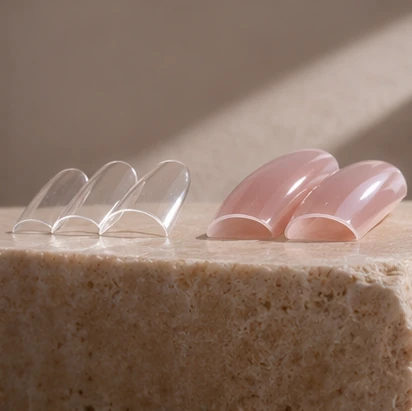
What ABS press-on nails are
ABS stands for acrylonitrile butadiene styrene, a thermoplastic used across consumer products because it balances toughness, rigidity, surface quality and ease of moulding and colouring. In press-on nails, ABS tips are light, flexible and consistent to produce, which makes them a strong base for solid colours, French tips, minimalist designs, seasonal drops and starter ranges. “ABS nails” in search simply means press-on tips moulded from this plastic.
What acrylic press-on nails are
“Acrylic press-on nails” are not the same as salon acrylics, which are built on the nail from liquid and powder. In sourcing, the term means pre-made tips in acrylic plastic, typically PMMA (polymethyl methacrylate), known for clarity, hardness and gloss. Acrylic tips feel more rigid and structured, which suits premium positioning, longer shapes, bridal sets and heavy decoration.
Key differences
| Factor | ABS | Acrylic |
|---|---|---|
| Positioning | Scalable, cost-controlled, retail-friendly | More premium, higher perceived value |
| Feel | Light and flexible | Harder and more structured |
| Finish | Excellent for solid colour, French and common effects | Suits glossy, salon-like looks |
| Cost | Usually lower | Usually higher |
| Best fit | Core lines, seasonal drops, affordable retail | Luxury, bridal, 3D and design-heavy collections |
Material name is not a guarantee. A well-made ABS set can outperform a poorly made acrylic one. Grade, thickness, curve, coating, adhesive compatibility and production control decide the result.
Which to choose
Choose ABS for mass retail, direct-to-consumer starter ranges, TikTok Shop testing and everyday colour drops: more SKUs, lower unit cost and faster testing.
Choose acrylic when touch, shine and structure are part of the promise: luxury collections, long shapes, raised decorations and packaging that positions the set as a premium item.
Let the customer decide. A trend shopper buying on social media weighs design, price and speed; a bridal customer weighs finish, durability and the moment the box is opened.
How material affects design, packaging and MOQ
A short oval nude set does not need the structure of a long coffin set with chrome powder and 3D flowers. Longer nails and raised details need more attention to thickness, curve and packaging protection; see 3D sculpted nails. Premium materials usually justify better trays and inserts. Custom colour matching, special finishes and many SKUs affect timing more than the base material itself; see MOQ and lead time.
Recycled content and waste
We also offer an RCS recycled material option. RCS, the Recycled Claim Standard, is a chain-of-custody standard for recycled content. If you plan to make recycled claims on pack, ask for the certification covering your specific product and keep it on file. Other practical ways to reduce waste in a press-on range: reusable sets with clear removal instructions, a remover pen so sets survive for a second wear, recyclable board packaging and fewer plastic components in the kit. Avoid broad claims such as “eco-friendly” without specific evidence.
Safety and documentation
The base tip is only part of the product. Adhesives, primers, coatings, colourants and decorations all matter. Ask suppliers for material specifications, safety data sheets for glue, coating details and the documents your market requires. See the quality and compliance guide.
Buyer checklist
- What price point and channel is the product for?
- Does the design need extra thickness, relief or finish protection?
- Will customers expect to reuse the set?
- Glue, tabs or both?
- How important is perceived luxury at unboxing?
- Can the factory hold colour, shape and material stable on reorders?
The better sequence is strategy, then design, then material, then sample testing, then production. In the sample book you can set ABS, acrylic or RCS recycled for any finish.
Run a paired tip trial
Ask for the same shape, width, finish and nominal thickness in both candidate materials. Otherwise a different mould or coating can dominate the comparison.
| Checkpoint | Calculation or evidence | Buying decision |
|---|---|---|
| Fit panel | Example: 12 wearers each assess both variants, yielding 24 observations. | Keep wearer and size in the record so a result can be paired. |
| Transport | Pack both variants in the same tray and outer box. Record breakage by tip and by set. | Two damaged tips in one set affect one saleable pack, not two. |
| Recycled-content claim | Request the material scope, percentage, transaction evidence and applicable standard version. | Do not transfer a resin-level claim to every component in the retail box. |
Textile Exchange describes verified chain of custody in its Recycled Claim Standard. Confirm the applicable version and supplier scope before ordering or printing a claim. Mechanical performance still needs to be checked on the finished tip.